 Want the latest insights & updates on employee ownership and share schemes?


We chose Postlethwaite because they are experts in employee ownership and share schemes, they are employee-owned themselves, of course... Postlethwaite were easy to deal with and we developed a good rapport with them... they made the whole process of issuing the EMI scheme very straightforward.
ED MASON, FOUNDER & MANAGING DIRECTOR, FIVE POINTS BREWING COMPANY
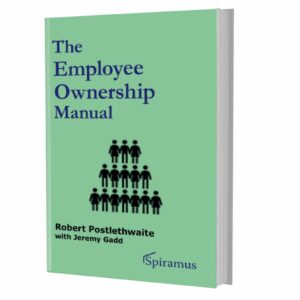
The Employee Ownership Manual
Published November 2019 and written by Robert Postlethwaite with Jeremy Gadd, The Employee Ownership Manual is a practical guide and reference book which explains in a comprehensive but approachable manner all the key legal, tax and practical issues that arise for a company becoming owned by its employees.
For more information and how to buy a copy click here

To explore how employee ownership could work for your company, call me on 020 3818 9420.
ROBERT POSTLETHWAITE, MANAGING DIRECTOR

Our experience with Postlethwaite has been nothing short of exceptional! We were instantly met with professionalism & expertise.As a company transitioning to an employee-owned model, and Postlethwaite navigated us through every step with clarity and efficiency. Their team's deep understanding of employee ownership structures ensured that our transition was seamless.They took the time to understand our unique needs and objectives Their proactive approach and attention to detail instilled confidence in us every step of the way.In summary, if you're seeking legal guidance for employee ownership or any other business matter, look no further than Postlethwaite. Their professionalism, expertise, and dedication make them the top choice for any legal needs.

We used Toby and his team for an EOT scheme , I have to say the attention to detail was fantastic and all the way through very pro active and responsive

We have recently transitioned to an Employee Owned Business, with the help of David Reuben and Toby Locke. We were so pleased with how responsive and helpful both were throughout the process; they are clearly experts in their field. The transaction proceeded exactly as outlined at the beginning of the process, with everything explained in clear and concise language. The draft documents were produced very quickly and we hit our initial deadline for completion a few weeks early. Even following the completion of our EOT, Toby has remained in touch to ensure that all the necessary post completion milestones are finalised. You really get the sense that the firm are looking to do an excellent job and go the extra step to ensure everything is concluded properly. We would have no hesitation recommending Postlethwaite's to anyone looking to move to an EOT or setup a share scheme for their employees.

Our company Garner Tackle formed an EOT back in 2019. We were guided through the whole process by Robert and the team at Postlethwaite's. From beginning to end the process was so easy, the team explained everything to us in a way we could understand. Over the last 4 years the changes to our business have only been positive, our staff are happier, more motivated and care deeply about the company and it's success. The move to become majority employee owned has been a complete success and we're so happy we used Postlethwaite's to advise and manage the process. Thank you 🙂

We have worked closely with Postlethwaite Solicitors for many years and more recently on several EOT transactions. They are always responsive and timely in dealing with both us and our clients, and their advice is always clear, particularly when discussing some of the more technical tax issues. David Reuben is a pleasure to work with. He always goes above and beyond, and overall we consider the team at Postlethwaite Solicitors to be experts in the Employee Ownership field.

David and Toby expertly guided us through an at times technical process with great knowledge, skill, pragmatism, patience and good humour. They hit all deadlines and communicated very well, clearly and quickly throughout. They are the go to experts in the EOT field. Extremely impressive and reasonably priced - highly recommended. Support staff good too. Many thanks to all at Postlethwaites.

We found Robert and the team to be very straight-forward, approachable and flexible in their dealings with our transition to Employee Ownership. It was a please to do business with them.

Professional. Courteous. Well informed esp. on EO. The ability to ask tough questions with empathy. Always reply in a timely fashion. Safe hands.

An excellent outcome and outstaying service from the team at Postlethwaite. Their advice at every stage was clear and they were first class in terms of demystifying what looked at the outset a rather daunting process.

We used them for an EMI scheme. Excellent to deal with, always very responsive, super knowledgeable and a quick turnaround. Highly recommend.

The team at Postlethwaite enabled Nikwax and Páramo to preserve our unique purpose-led values whilst building a sustainable future as we transition from being founder owned to an exciting employee-owned collective. Nothing was too much trouble; complexities and challenges were solved with an efficient, collaborative and ultimately bespoke approach that worked for us. Thank you for helping us to secure a special and exciting future as Partners in our business!

My wife and I have recently transitioned our business into a 100% Employee Owned Trust.We both unreservedly recommend using Postlethwaite solicitors.Right from our initial contact with David Reuben it was clear that this was someone who listened carefully to our plans and explained what is a complex transaction clearly and concisely.David promised a turn key solution and that is exactly what he and his team delivered .As the process progressed, we were introduced to Jo Cunningham who's attention to detail and speed of reply to any question very often outside of normal working hours was amazing .The entire process was completed on time and under budget we were never rushed or felt under pressure. Postlethwaite really do deliver client satisfaction.In summary if you are looking to transact what may well be the biggest step in your company’s journey you need sound clear thoughtful professional advise, in our opinion you need Postlethwaite!Howard and Anna JonesJust Pudding Basins Ltd

Many thanks to David, Toby and the team at Postlethwaite for their impressive work on completing our EOT. Highly efficient and very easy to work with, they made the whole thing painless!
